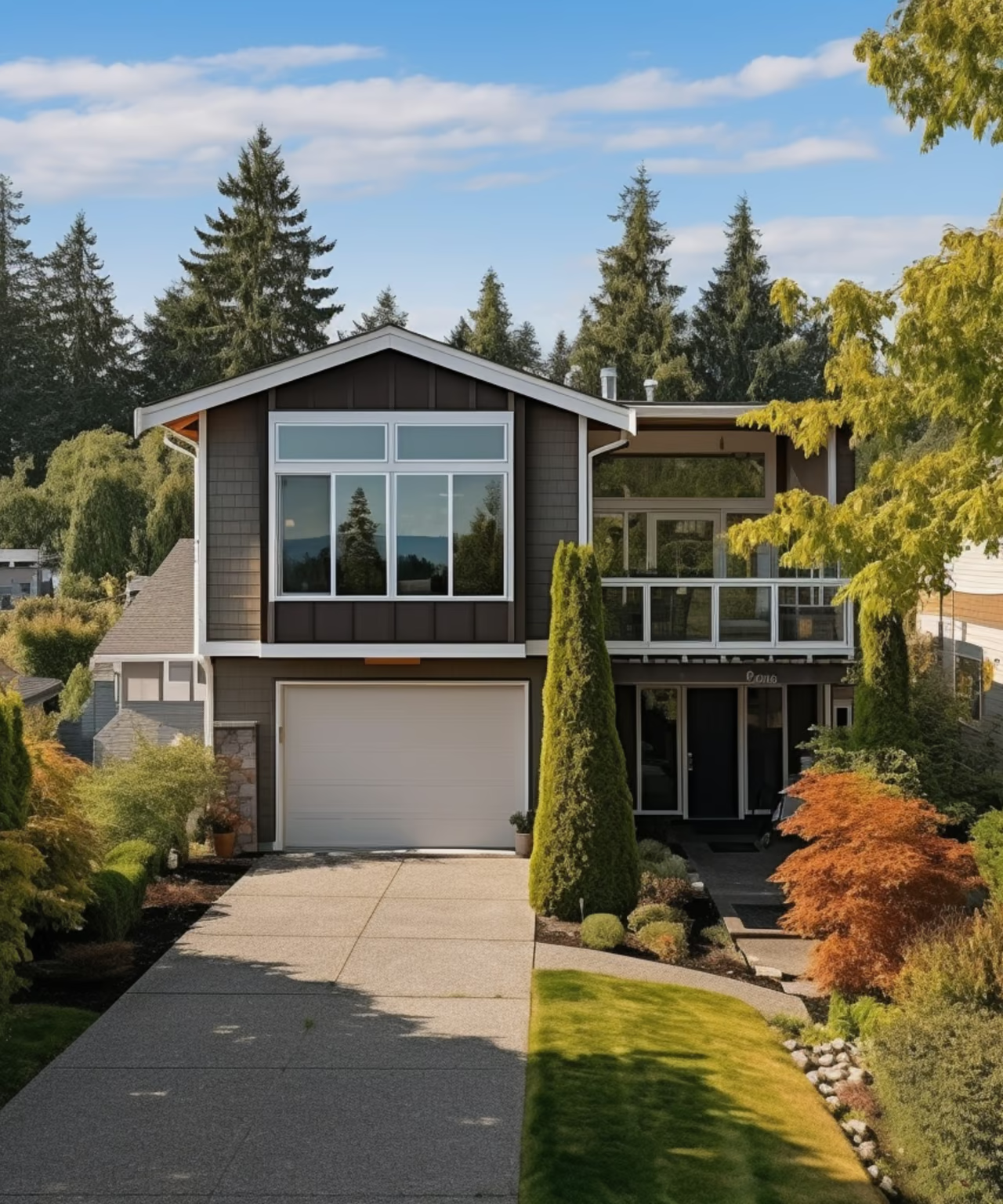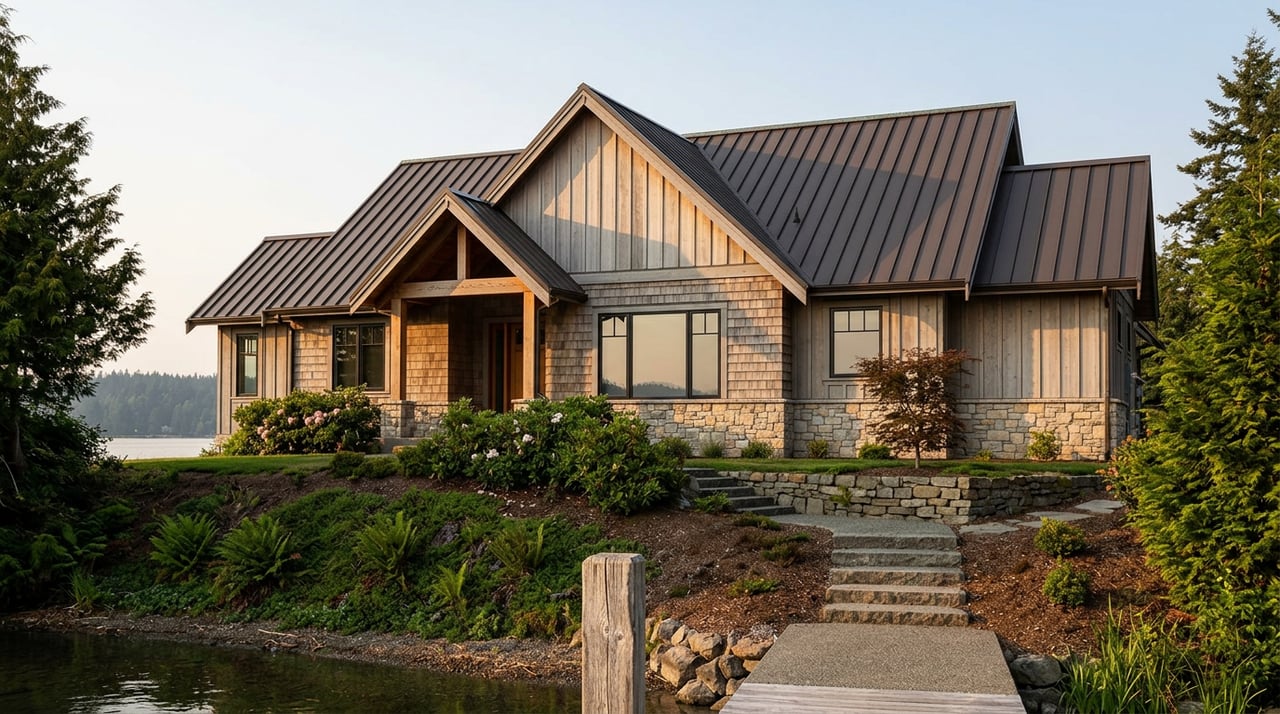
Picture a low-bank home on Liberty Bay hitting the market on a Friday. By Monday, seven offers are in, which is roughly what a Poulsbo waterfront listing draws right now. The seller assumes the hard part is over. Then escrow calls about the septic system, and the timeline everyone agreed to on paper starts slipping.
This is the part of selling waterfront property in Poulsbo that rarely makes it into the general advice you'll find elsewhere. Everyone talks about staging the dock view and pricing against comparable Liberty Bay sales. Almost nobody talks about the two paperwork tracks, one for what's under the house and one for what's in front of it, that run on their own clocks and don't care how many offers you received.
The Market Isn't the Bottleneck
As of mid-September 2026, there were 21 waterfront homes for sale in Poulsbo, with a median list price of $640,000. That's not a large pool, and it moves fast: homes across the broader Poulsbo market are averaging around 41 days on market and drawing about seven offers each. Demand for water access on Liberty Bay, the Hood Canal shoreline, and pockets like Lemolo Shore isn't the constraint.
What actually stretches a closing timeline on these properties is documentation the buyer's home inspector never touches. A standard inspection covers the roof, the electrical panel, the foundation. It does not cover the septic system, and in Washington a general home inspector's assessment of a septic system is explicitly not a substitute for the real thing. Waterfront and rural-adjacent parts of Poulsbo, especially anything outside the city sewer boundary, rely heavily on septic and private wells. Kitsap County has an estimated 58,000 septic systems countywide, and a meaningful share of them sit on or near the water.
The Inspection Everyone Forgets Isn't the Buyer's
Before any property served by an on-site septic system can transfer ownership in Kitsap County, the seller needs a Property Conveyance Inspection, or PCI, from Kitsap Public Health. This isn't a lender requirement or a buyer's request. It's a standing rule under Kitsap Public Health Board Ordinance 2025A-01, and it applies whether the buyer asks for it or not.
The county's own numbers explain why this catches sellers off guard. In 2025, Kitsap Public Health completed 1,743 property conveyance inspections. Of those, 450, or 27 percent, turned up significant deficiencies. That's more than one in four septic systems flagged with a problem serious enough to note, on a system the seller may not have thought about since the day it was installed.
A drainfield that's been quietly compromised by a shed built too close, or a tank that's never been pumped on schedule, doesn't show up in a walkthrough. It shows up in the PCI, and often after the home is already under contract with a closing date the buyer expects to hit.
If You're on a Well, There's a Second Report
Septic isn't the only system with its own transfer rule. Any Poulsbo property served by a private well or a Group B water system needs a Water Status Report from Kitsap Public Health before the sale closes, a requirement that's been in effect since March 2019. The health district recommends submitting the application at least 30 days before the property transfer, specifically so any issues it turns up can be addressed before closing rather than during it.
Two separate reports, two separate agencies within the same health district, two separate timelines. Neither one is triggered automatically when you sign a listing agreement. Both have to be requested.
| Documentation | Who needs it | What determines the timeline |
|---|---|---|
| Septic Property Conveyance Inspection | Any home on an on-site septic system | 27% of 2025 Kitsap inspections found significant deficiencies requiring resolution |
| Water Status Report | Homes on a private well or Group B water system | Health district recommends submitting 30 days before transfer |
| Shoreline permit and DNR lease confirmation | Homes with a dock, bulkhead, or pier on state-managed tidelands | No fixed deadline, but lease status must be confirmed as active and transferable |
The Dock, the Bulkhead, and the Land You Don't Actually Own
Liberty Bay adds a third layer that has nothing to do with plumbing. In Washington, ownership of the upland lot and ownership of the aquatic land in front of it are frequently two different things. If a dock, pier, or bulkhead extends over state-managed bedlands, the structure may depend on a Department of Natural Resources lease or authorization that needs to be confirmed as active and transferable before the sale closes, not assumed.
The paper trail behind a Poulsbo dock can include a Washington Department of Fish and Wildlife Hydraulic Project Approval, a DNR authorization if state tidelands are involved, and in some cases Army Corps or Department of Ecology review, all coordinated through the state's Joint Aquatic Resource Permit Application process. Poulsbo's own Shoreline Master Program regulates over-water structures and shoreline stabilization work within city limits, which means a bulkhead repaired without the right permit history can become a disclosure conversation mid-transaction rather than a line item on the listing sheet.
The cost of getting this wrong isn't abstract. Replacing or repairing a bulkhead or seawall on this kind of shoreline can run from the hundreds to the low thousands of dollars per linear foot, depending on the site and the design. A buyer's lender or title company asking about permit status late in escrow isn't being difficult. They're asking because the answer affects real money.
Lemolo Shore, Pearson Point, and Scandia Aren't the Same Diligence
Part of what makes this tricky is that Poulsbo's waterfront isn't one market with one set of assumptions. A cottage on Lemolo Shore with an older bulkhead and a shared access easement carries a different due-diligence file than a newer build on Pearson Point with a private dock and a confirmed medium-bank shoreline. A property in the Scandia area along the canal, with its own well and a septic system installed decades ago, needs both health district reports started early, while a home with public sewer and no shoreline structures may only need one.
None of this shows up in the median price or the days-on-market figure. Two homes can list at the same price on the same street and close on completely different timelines, because one seller called the health district and a shoreline permit specialist in the first week of listing, and the other waited for escrow to ask.
What This Means If You're Listing This Fall
If you're planning to list a Liberty Bay, Hood Canal, or canal-adjacent Poulsbo property, the sequence that protects your closing date looks like this before you go live: order the septic Property Conveyance Inspection if you're on an on-site system, request the Water Status Report if you're on a private well or Group B system, and if there's a dock, bulkhead, or pier, ask directly whether it sits on state-managed tidelands and whether the DNR lease or shoreline permit is current and transferable.
None of this changes what your home is worth. It changes whether the seven offers you receive turn into a closing on schedule or a closing that slips while everyone waits on a county report that could have been requested a month earlier.
FAQ
Does every Poulsbo waterfront home need a septic inspection? Only if it's served by an on-site septic system rather than city sewer. Many waterfront and canal-adjacent properties outside Poulsbo's sewer boundary are on septic, so it's worth confirming early rather than assuming.
Who pays for the Property Conveyance Inspection? The requirement falls on the seller under Kitsap Public Health's ordinance, though like most closing costs, who actually pays can be negotiated as part of the purchase agreement.
What if the dock or bulkhead doesn't have clear permit records? Start with Kitsap Public Health and the relevant shoreline permit history rather than assuming the structure is unpermitted. Older docks and bulkheads sometimes have authorizations on file that simply haven't been requested in years.
Does a fast-selling market change any of this? No. A property can draw multiple offers in days and still take weeks longer to close if the septic, water, or shoreline documentation wasn't started before it hit the market.
If you're weighing a sale on Liberty Bay, the Hood Canal shoreline, or anywhere else in Poulsbo's waterfront market, Ashley Grimes can walk through exactly which reports your specific property needs and help you line them up before your first showing, not after your first offer. Explore Properties & Get Your Home Value.