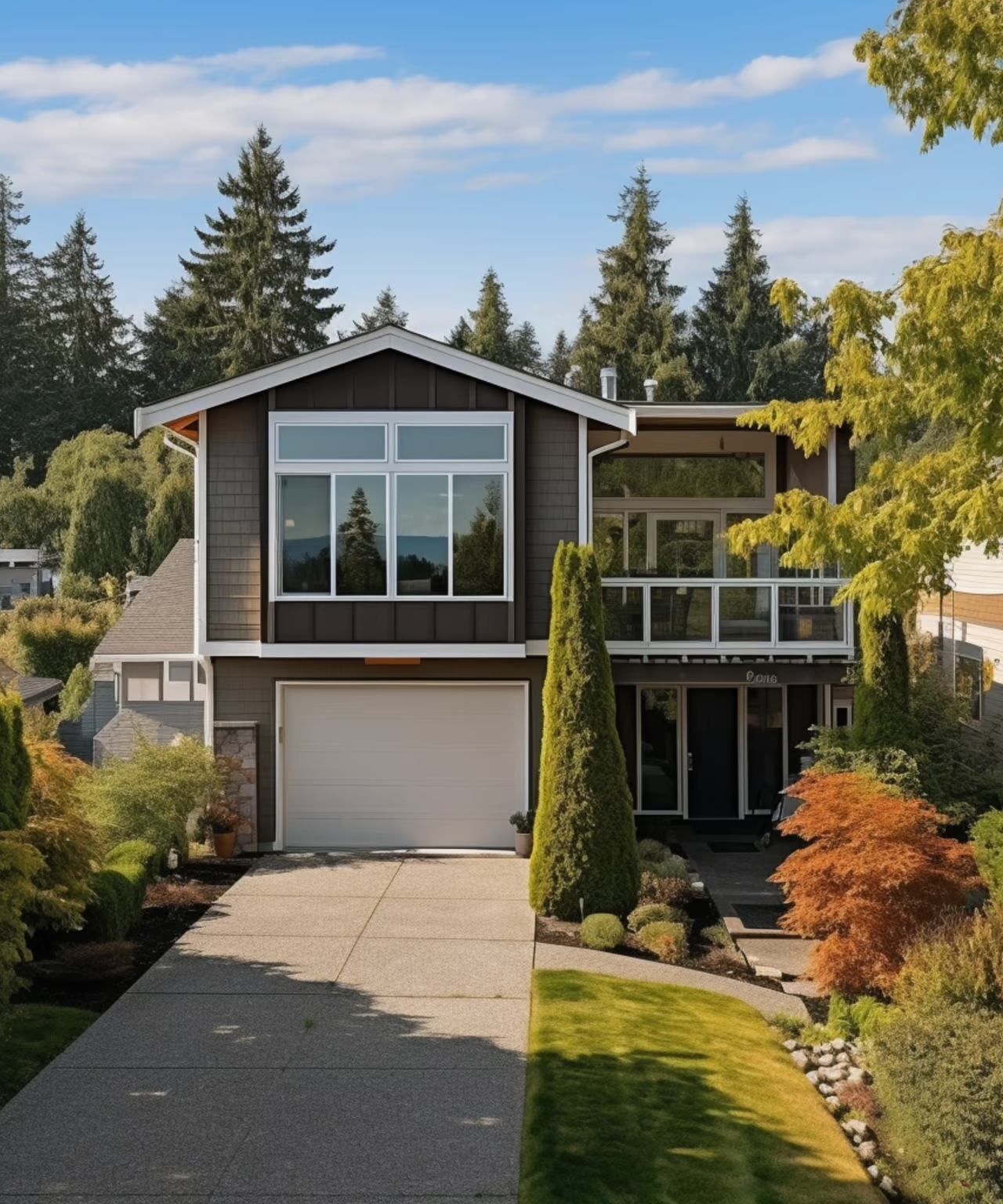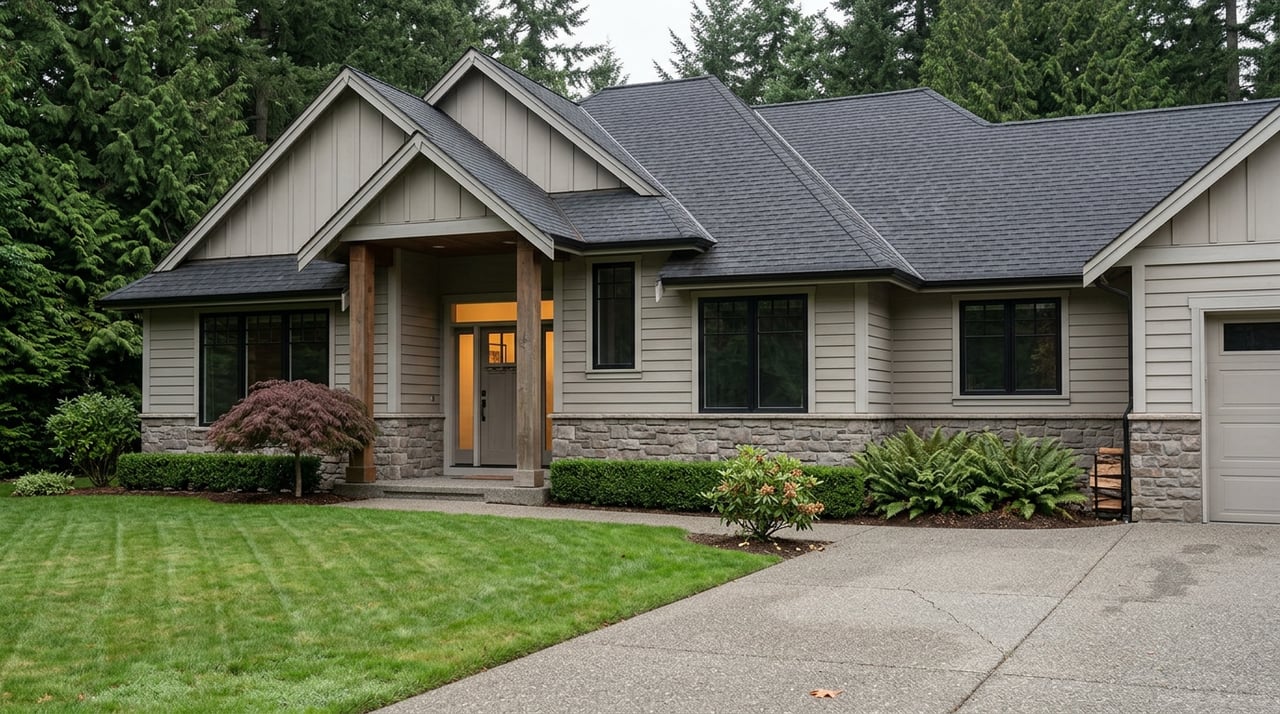
If you have started comparing Kitsap County neighborhoods with any seriousness, you have already done the math on Bainbridge Island. The county's median sale price landed at $587,495 in April 2026, according to Northwest Multiple Listing Service data. Bainbridge homes were selling for a median of $1.1 million over the three months ending that same April, per closed sales figures, and the average value across the island sat just above $1.18 million as of late June 2026. However you slice it, Bainbridge runs roughly double the rest of the county.
The easy explanation is the ferry. Thirty-five minutes to downtown Seattle, no bridge traffic, no I-5 merge. Buyers assume they are paying for a guaranteed, low-friction commute, and that the commute is baked into the price the way a finished basement or a third garage bay gets baked into a listing price elsewhere.
That assumption does not hold up once you look at what the ferry actually costs, what it has actually been doing in 2026, and what is actually driving the price gap instead.
What the Ferry Actually Costs
As of the fare schedule that took effect May 1, 2026, crossing to Seattle is not expensive. A round-trip foot passenger ticket runs $11.35 for an adult, $5.65 for a senior, and nothing at all for anyone under 19. If you drive your car on, you are looking at $21.30 each way for the vehicle and driver. Commuters who buy in bulk pay even less.
| Fare type | Cost | Notes |
|---|---|---|
| Round-trip foot passenger | $11.35 | Seniors $5.65, free under 19 |
| Vehicle and driver, one-way | $21.30 | Additional passengers extra |
| 10-trip commuter card | $90.40 | Walk-on only |
| Monthly pass (31 round trips) | $144.65 | Walk-on only |
A daily walk-on commuter paying full monthly-pass price is spending less than $150 a month to get to downtown Seattle in about 35 minutes dock to dock. That is not a number that explains a $500,000 gap between Bainbridge and the rest of the county. If the ferry itself were the product buyers were paying a premium for, the pricing would show up in the fare, not the home.
So What Are You Actually Paying For
The ferry is cheap because the state subsidizes it as public transit. What is not subsidized, and what does not scale the way transit fares do, is land.
Bainbridge Island covers about 28 square miles and holds roughly 25,000 residents. Shoreline management rules limit how close to the water you can build, septic requirements cap density in areas without sewer service, and a large share of the island's land is either protected, steeply sloped, or already spoken for. New construction happens, but it happens at a pace that land-constrained islands allow, not at the pace a mainland subdivision allows.
Layer onto that a school system residents consistently rate well, a walkable village center in Winslow with its own daily rhythm independent of the ferry schedule, and public land like the Bloedel Reserve's roughly 150 acres of gardens and forest that will never be rezoned for housing. Waterfront and view properties, including the deep-water moorage lots around Eagle Harbor, carry a further premium because there are only so many parcels that touch the water at all.
None of that is about the commute. It is about supply that cannot expand to meet demand, in a place enough people want to live that the shortage shows up in the closing price rather than the ferry fare.
The Commute You Think You're Buying
Here is the part that should matter most to anyone weighing the price gap against commute value: 2026 has not been a reassuring year for ferry reliability.
In the first week of January 2026, Washington State Ferries needed 17 boats to run its system at full capacity and had only 14 in service. On January 3, mechanical trouble pulled the Tacoma off the Seattle-Bainbridge route entirely after an oil tube issue caused high shaft bearing temperatures, and the route ran on a single boat into the following week. Riders interviewed by local news described breakdowns and delays as a recurring pattern rather than a one-time event.
Governor Bob Ferguson acknowledged in December 2025 that much of the fleet is old, and his proposed transportation budget sets aside $1 billion for three new ferries plus $150 million to maintain the boats already running. A Washington State Standard analysis published in January 2026 added an important nuance: cancellations and delays trace back at least as often to a shortage of licensed engine room crew, required by Coast Guard regulation, as to the boats themselves. The average vessel in the fleet is more than 50 years old.
To be fair to the system, 2025 was not a lost year. WSF's own April 2026 service planning documents show 2025 ridership hit 20.1 million system-wide, the first time it topped 20 million since 2019, with about 7,000 additional sailings added and roughly 400 fewer cancellations than 2024. The trend line is pointing the right direction. But the January 2026 disruptions on the Seattle-Bainbridge route specifically show that "the ferry is reliable" is a claim currently being tested in real time, not a settled fact you can price into a home purchase with confidence.
If part of what you assumed you were buying on Bainbridge was a bulletproof commute, that assumption is shakier this year than the price tag implies. Which makes the land and school argument for the premium stronger, not weaker. You are not paying half a million dollars for a ferry ride. You are paying it for scarce ground in a place people do not want to leave, ferry service aside.
The Median That Moved in Two Directions at Once
There is a second wrinkle in the current numbers worth sitting with if you are trying to time a Bainbridge purchase.
Over the three months ending in April 2026, the median sale price on the island was $1.1 million, down 18.8 percent from the same window a year earlier. Price per square foot fell too, down 15.3 percent to $493. That reads like a cooling market.
But in the same window, homes sold in a median of 8 days, down from 15 days a year prior, and 87 homes closed in April 2026 compared to 73 in April 2025. That is a market moving faster and doing more volume, not less. A falling median alongside faster sales and higher volume is not what a cooling market usually looks like.
The likely explanation is mix, not demand. Bainbridge sells relatively few homes in any given month, and a handful of high-value waterfront closings can swing the median hard in either direction simply because there are so few of them to begin with. A month heavy on Eagle Harbor estate sales pulls the median up. A month heavy on smaller Winslow-area homes pulls it down, even if buyer interest in the island as a whole has not changed at all.
The practical takeaway is that a single month's Bainbridge median tells you less than it looks like it tells you. If you are cross-shopping neighborhoods based on a headline number you saw once, you are reading noise as if it were signal.
What This Means If You're Cross-Shopping Kitsap
If you are comparing Bainbridge to Poulsbo, Silverdale, or Port Orchard on price alone, widen the lens before you draw a conclusion.
Look at multiple months of sales, not one. A single month on Bainbridge can be pulled hard by a small number of waterfront closings in either direction, in a way that would barely move a larger, more liquid market. Separate waterfront and view properties from inland homes when you compare price per square foot, because lumping them together compares two different products under one label. And weigh the commute on its current, documented performance rather than its reputation, since 2026 has shown that even a short, cheap ferry ride is not immune to mechanical age and crew shortages.
None of this means Bainbridge is overpriced or that the island's appeal is misplaced. It means the premium is doing something specific: paying for land that cannot be replicated and schools and a village center that took decades to build, not for a commute that costs less than a tank of gas and is not currently running at full strength anyway.
FAQ
Will the Bainbridge ferry fares go up soon? Fares are set by Washington State Ferries and change periodically. The rates cited here took effect May 1, 2026, and any future change would come from the state, not from local demand on the island.
Does the ferry disruption affect vehicle reservations too? Vehicle capacity on the Seattle-Bainbridge route is limited regardless of mechanical status, since the vessels that serve it carry roughly 200 cars each. When a route drops to one boat, vehicle space gets tighter on top of the reduced sailing frequency.
Is waterfront on Bainbridge a safer long-term bet than inland property? Waterfront and view homes have historically commanded a real premium on the island because so few parcels touch the water, but results still depend on the specific property, shoreline condition, and broader market cycle at the time you buy or sell.
If you are weighing Bainbridge against another Kitsap community and want a read on what a specific property or neighborhood is actually worth right now, not a countywide average, Ashley Grimes can walk you through the comparison street by street. Explore properties and get your home value today.