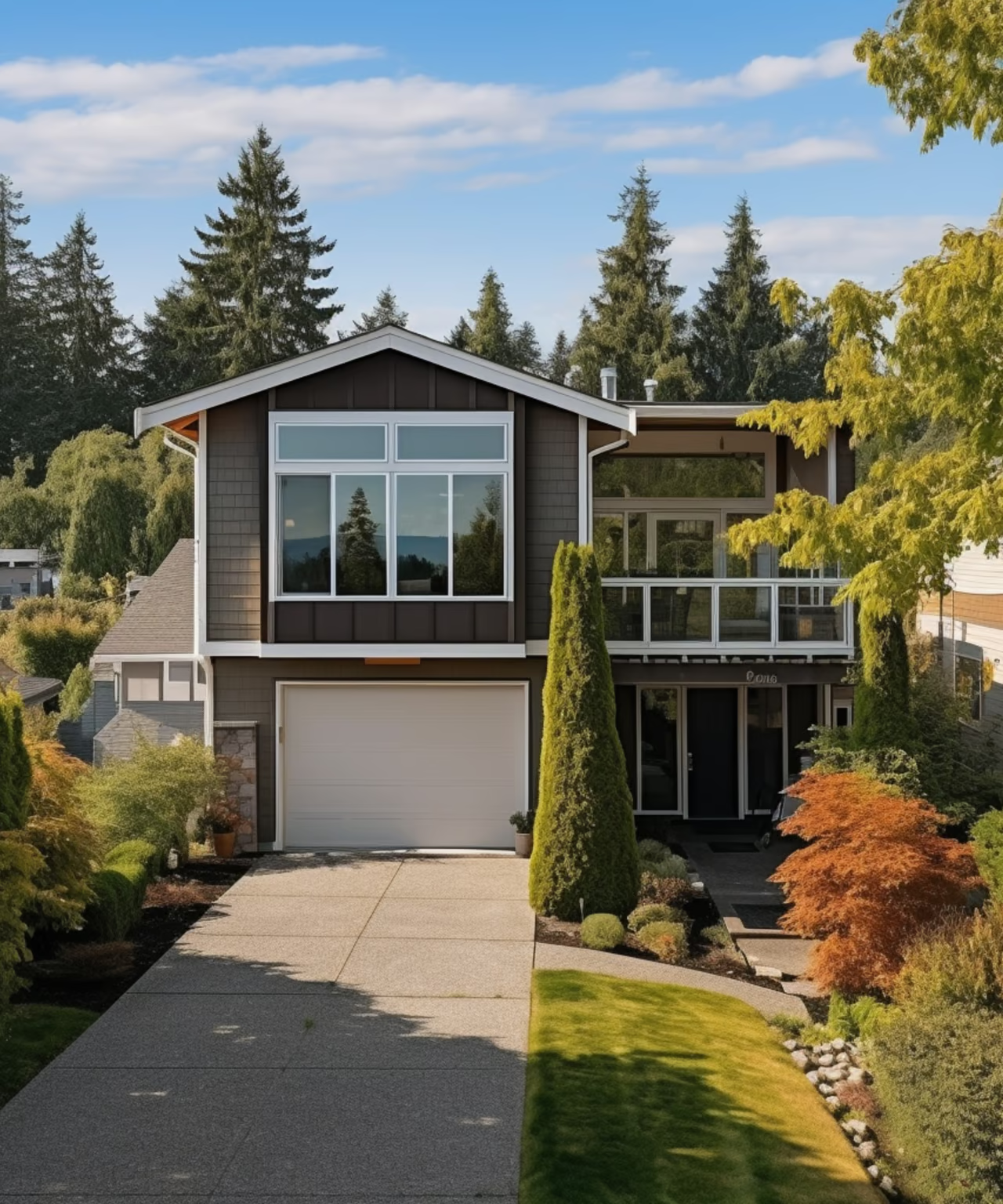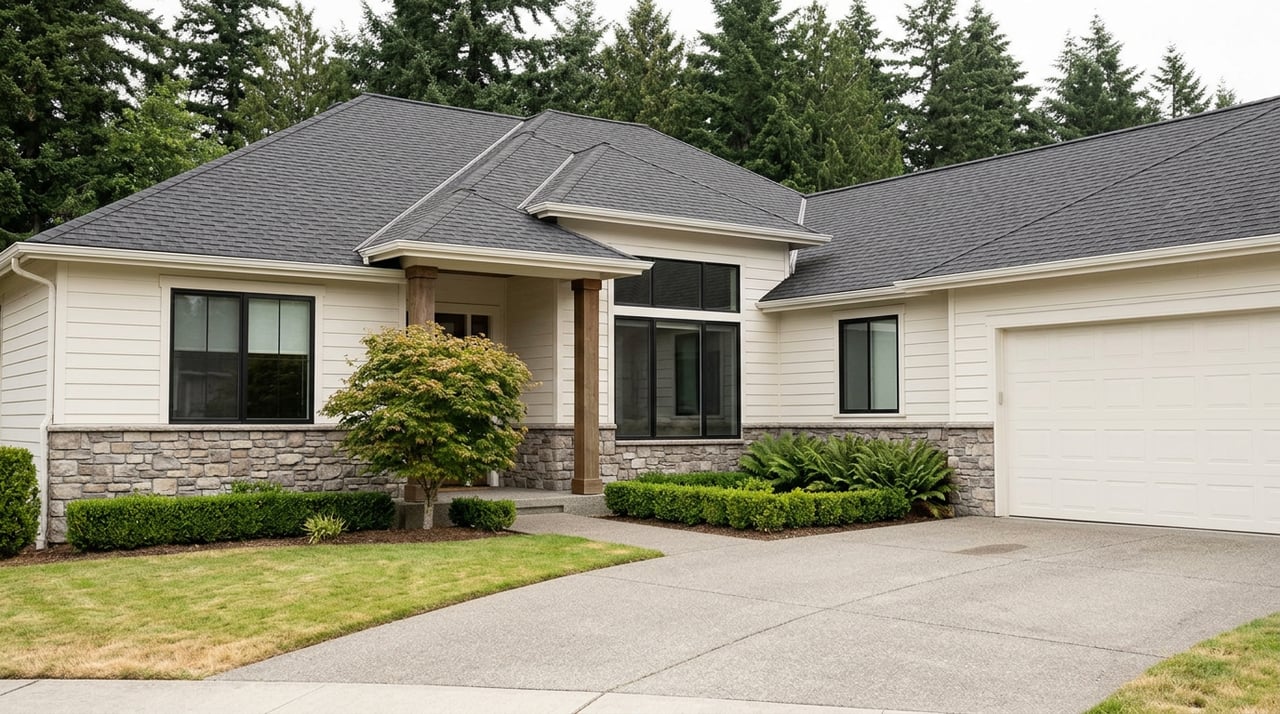
Two houses list in Silverdale on the same week this summer. One is a four-bedroom rambler on a cul-de-sac in Ridgetop, gas fireplace, wood floors, built sometime before anyone worried about soft-close cabinets. The other is a brand-new three-story Prindle plan at Sterling Hills Estates, still smelling like fresh paint, 3,194 square feet of Lennar's current floor plan lineup. Ask a buyer shopping both which one goes under contract first, and most guess the new build. Newer usually means faster, cleaner, less to negotiate.
They'd be wrong. And the reason says more about how this market actually prices risk than any single median number can.
Two markets, one blended price
Portals average everything together, which is exactly why the Silverdale "median" on a homepage doesn't tell you much. Pull the resale and new-construction numbers apart and they tell two different stories.
Over the three months ending in May 2026, resale homes in Silverdale sold at a median of $575,000, moving in an average of 10 days with buyers fielding about two competing offers each. A separate snapshot of Northwest MLS listings from early summer put the resale median at $595,000, up from $560,450 just six months earlier, with homes spending a median of 17 days on market and sellers collecting 99 cents on every dollar of asking price. Only 38 resale homes changed hands in Silverdale that May, down from 57 the year before, which is the scarcity behind those fast timelines.
New construction runs the opposite direction. As of the first days of August 2026, active new-home listings in Silverdale carried a median asking price of $630,000 and were sitting a median of 25 days before drawing a single offer. Zoom out to actual closings and the gap widens further: builders sold new single-family homes in Silverdale at a median price of $735,740 over the trailing six months, on homes averaging 2,540 square feet.
Resale (3-month window, spring/summer 2026) | New construction (closings, trailing 6 months) | |
|---|---|---|
Median price | $575,000–$595,000 | $735,740 |
Median days on market | 10–17 days | 25 days (active listings) |
Offers per home | About 2 | About 1 |
Who sets the price | Individual seller, reading a thin resale supply | Builder, reading absorption across a whole community |
A buyer skimming the top-line median never sees this split. They see one number and assume one market.
Why the newer house waits longer
The mechanism isn't complicated once you separate who is selling.
A resale seller in Ridgetop or along the streets feeding Old Town's boardwalk on Dyes Inlet has one house. They're usually buying their next place with the proceeds from this one, and they're reading a market where only a few dozen comparable homes sold last month. In that position, pricing near market value and waiting a week for the right buyer is the rational move. There's no incentive to build in room to negotiate when two other households are ready to write an offer this weekend.
A builder is playing an entirely different game. Sterling Hills Estates isn't one house, it's a community working through its final phase of lots off Treasure Drive NW, with some floor plans already marked sold out on the builder's own site and others still listed as of early August 2026, priced roughly $649,950 for a four-bedroom Prindle plan up to $799,990 for a five-bedroom layout. A public build-out that size doesn't need any single home to sell in a week. It needs the whole inventory to clear at a margin the company can defend to its shareholders.
That difference in patience shows up as price flexibility a resale seller simply doesn't have. Builders can move interest rates through their own lending arms, offer closing cost credits, or throw in design center upgrades, tools that let them hold a higher sticker price while still giving a hesitant buyer a reason to sign. An individual homeowner selling the one house they live in has none of that machinery.
The house that costs more and takes longer to sell isn't overpriced. It's priced by someone who can afford to wait, and it's negotiable in ways the fast-moving resale listing down the street never will be.
What this looks like on the ground
Walk through a few Silverdale pockets and the split gets concrete.
Ridgetop's quiet, sidewalked streets sit inside Central Kitsap School District boundaries and are close enough to Silverdale Way and the hospital corridor that resale listings there tend to move with the rest of that fast 10-to-17-day window. Old Town, the older neighborhood hugging the seawall and the boardwalk on Dyes Inlet, carries the same resale dynamic with a smaller, more character-driven inventory, homes that come up for sale infrequently and get fought over when they do.
Sterling Hills Estates, on the newer end of Treasure Drive NW, is the clearest example of the builder side of the ledger. Smaller, quieter subdivisions like Whisper Ridge, Twelve Oaks, and Lakeland Heights near Island Lake round out the resale inventory with their own individual sellers, each pricing against a thin comparable set rather than a builder's absorption schedule.
None of this means one type of home is better. It means the negotiating room, the timeline, and the actual price you'll pay depend heavily on which of these two markets you're shopping in, not on the single median number a portal shows you first.
What it means for your offer
If a resale home in an established pocket like Ridgetop or Old Town is what you want, plan to move within days, not weeks. Waived contingencies and near-asking offers are common in that thin a market, so pre-approval and a clear sense of your ceiling before you tour matter more than they would somewhere with looser inventory.
If you're drawn to a new-construction community like Sterling Hills Estates, the math flips. The sticker price runs well above the resale median, but the 25-day average time on market and the builder's own financing incentives mean there's real room to negotiate rate buydowns, upgrade credits, or closing costs, leverage a resale seller in this market simply can't offer.
Knowing which game you're playing before you write an offer is the difference between competing on price and competing on terms.
FAQ
Does new construction always cost more than resale in Silverdale? Over the trailing six months, yes. New single-family homes closed at a median of $735,740, well above the $575,000 to $595,000 resale median for the same period. The gap reflects builder pricing strategy and financing incentives as much as it reflects the physical difference between an older home and a new one.
Is there new construction near Old Town or the Clear Creek Trail corridor? Most current new-home activity in Silverdale, including Sterling Hills Estates, sits along the Treasure Drive NW corridor rather than directly in Old Town's older waterfront blocks, which are built out and turn over through resale.
Can I negotiate with a builder the way I might with a resale seller? Builders typically don't negotiate the base price the way an individual seller might, but they do have flexibility on financing incentives, closing costs, and design center credits, tools that show up more often in communities where homes are sitting closer to that 25-day average than moving in a week.
Buying in Silverdale means reading two markets at once, and the right strategy looks different depending on which one your dream house belongs to. If you want a second opinion on a specific listing, or a hand walking through what a builder's incentive package is actually worth, Ashley Grimes can help you sort the leverage from the list price. Explore Properties & Get Your Home Value today.